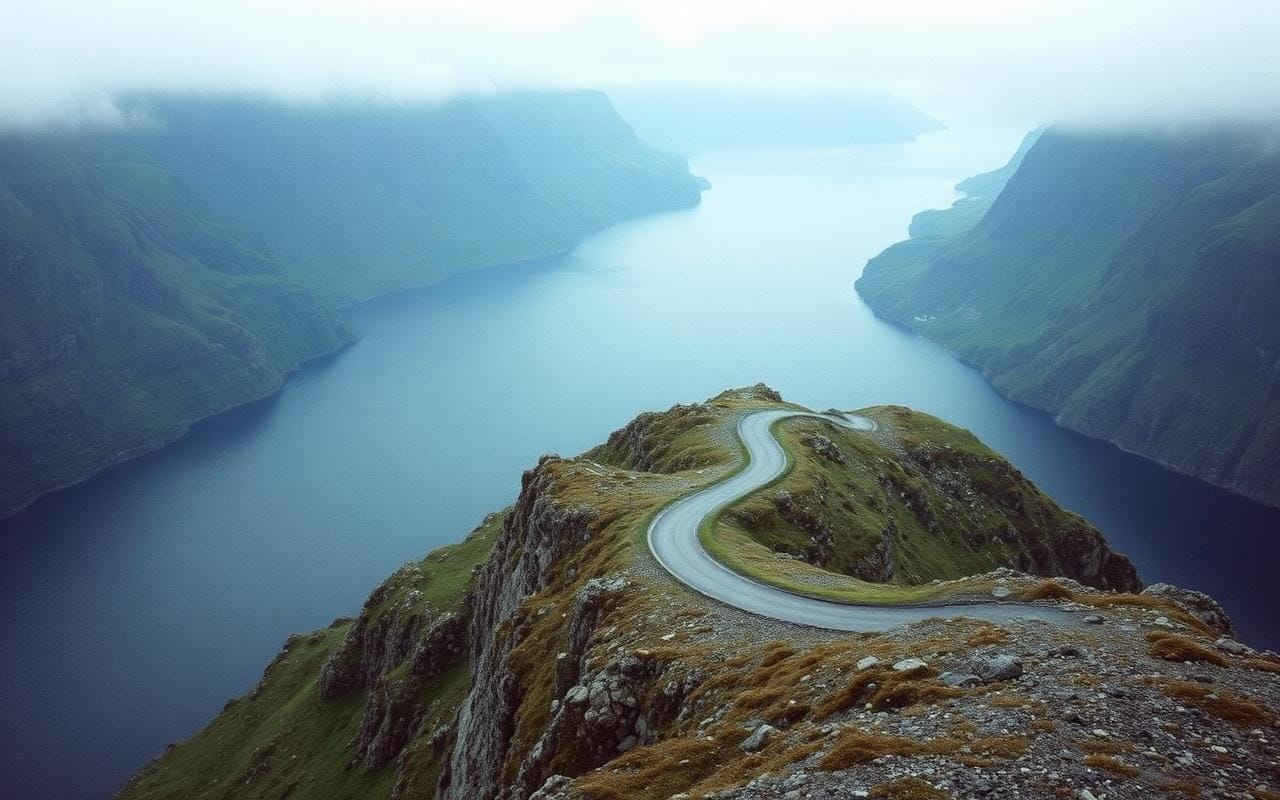
Norway off the beaten track: an adventure van trip beyond the classic fjords
There are two Norways.
The first one is on Instagram: Trolltunga at sunrise with fifteen people queuing behind you, Geirangerfjord seen from a cruise ship deck, the Atlantic Road with its lighthouses — the same photo taken millions of times from the same angle.
The second Norway has no hashtag. It's called Finnmark, the Vesterålen archipelago, the Varanger Peninsula, the island of Senja. It's accessible, often free, and beautiful in a way that hasn't yet been turned into a product.
This guide is for the second one.
Why skip the classics in high season
Norway hosts 5 to 6 million foreign visitors per year for a population of 5.5 million. In July and August, the "Instagram sites" operate like theme parks: Preikestolen now requires a paid reservation, Lofoten ferries sell out weeks in advance, and wild camping spots around Reine or Svolvær are overrun.
This isn't a reason to avoid Norway — it's a reason to change your itinerary.
The regions in this guide share one characteristic: they're accessible, spectacular, and see a fraction of the footfall of the famous spots. In Finnmark, wild camping is legal and practised without any social pressure. On Senja Island, fishing villages have rainbows and mountains falling into the sea — and nobody in the car park.
The Norway worth going out of your way to find: 5 alternative regions
1. Senja — the Lofoten of twenty years ago
Senja is often described as "what the Lofoten were like twenty years ago." It's Norway's second-largest island, two hours from Tromsø, accessible by ferry or road from the mainland.
The mountains of the western coast (the Ytre Senja face) are as dramatic as anything in the Lofoten: peaks dropping directly into the sea, red timber fishing villages, rock arches, and white sand beaches in turquoise water (yes, in Norway, at 69°N). The most striking ones — Tungeneset, Segla, Bergsbotn — are accessed by 3 to 5 hour hikes.
Wild camping is possible on almost the entire west coast. The spot at the foot of the Segla mountain, overlooking the strait, is one of the finest wild camping locations it's possible to find in Europe.
Highlight hike: Segla (5 km, 3h30, 639 m gain) — the sail-shaped summit dominating Fjordgard. 360° view over the islands and the sea. Moderately demanding, accessible to most reasonably fit walkers.
2. Varanger — the end of the road that earns its distance
The Varanger Peninsula, in eastern Finnmark, is a few kilometres from Russia. It's one of the most accessible areas of tundra in Europe and one of the continent's finest birdwatching destinations.
The village of Vardø sits on an island linked by an underwater tunnel. It's the easternmost town in Norway, and one of the few where winter polar night lasts more than two months. In summer, the cliffs host colonies of Atlantic puffins, kittiwakes, and Brünnich's guillemots — tens of thousands of nesting birds.
Store Ekkerøy, a limestone cliff 10 km from Vadsø, is the most accessible puffin nesting site in Norway. The car park is 100 metres away. In July, you can watch puffins from two metres' distance.
The tundra between Varangerbotn and Nesseby is home to the Varanger Sami Museum — covering coastal Sami culture, distinct from the inland reindeer-herding tradition. An hour here is enough to understand how fundamentally different coastal Sami life was.
Recommended bivouac: the northern shore of Varangerfjord, between Nesseby and Vadsø. Flat, open, view across the fjord and tundra. Constant wind, but spectacular.
3. The Finnmark interior — the plateau that goes on forever
The Finnmarksvidda is the largest subarctic tundra plateau in western Europe — 22,000 km² of near-treeless wilderness, crossed by salmon rivers and grazed by the reindeer herds of Sami pastoralists.
The town of Kautokeino is the cultural heart of the inland Sami community. More than half the population speaks Northern Sami as a mother tongue. The Beaivváš Sámi Teáhter (Sami Theatre) runs summer programmes. Juhls' Silver Gallery is a Sami art foundry established in the 1950s and still operating — silver jewellery inspired by traditional motifs, made on-site.
Salmon fishing in the Kautokeino River is among the best in Norway. Permits are available online — around €50/day — and the river is wader-accessible from the banks.
Wild camping on the plateau is legal and practised, but you need to be prepared: wind can be brutal, temperatures drop to 5–8°C even in July, and Finnmark mosquitoes belong in a category of their own.
4. Helgeland — Norway's thousand-island coast
Helgeland, between Trondheim and the Lofoten, may be the most underestimated region on the entire Norwegian coast. Thousands of islands and islets, jagged mountains rising from the sea, fishing villages that the ferry visits once a day.
The Kystriksveien (Route 17) is often called the most beautiful coastal road in Norway — knowing that the competition is fierce. It crosses Helgeland from south to north via seven to ten ferries depending on the exact route. Allow 3 to 4 days to drive it without rushing.
Islands worth going out of your way for:
- Træna: an archipelago of 1,000 islands, only one permanently inhabited. The ferry from Nesna takes 4 hours. On the main island (Husøya), 450 residents, a music festival in July (Træna Festival), and cliffs that fall directly into the Arctic Ocean.
- Lovund: a volcanic island with a colony of 200,000 puffins. Accessible by ferry from Sandnessjøen (1h30). In July, puffins are everywhere on the northern cliffs — the sound of a colony that size at dawn is unforgettable.
- Blomsøya: smaller and lesser-known, accessible by a short ferry crossing. Octopus (blekksprut) are fished here and sold fresh — an unexpected gastronomic curiosity in Norway.
Recommended bivouac: the beach at Støtt on Støtt Island, accessible by ferry. White sand, cold clear water, view of the Syv Søstre (the Seven Sisters — seven jagged summits). Almost nobody around.
5. Troms — between Tromsø and the Lyngen Alps
Tromsø is the Arctic Circle's capital and one of northern Norway's most dynamic towns. Don't pass through too quickly: the Saturday morning market on the main square is excellent, and the polar museum (Polaria) is worth two hours.
But the main draw for vanlifers lies to the east: the Lyngen Alps (Lyngsalpene). A mountain range rising directly from Lyngenfjord, with glaciers descending to almost sea level. In the van, the road running along the eastern side of the Lyngen (the Kvenvik–Olderdalen shore) offers views that travel guides rarely describe — simply because there's no official reason to stop, other than the landscape itself.
The Lyngen Glacier is accessible on foot from the village of Lyngseidet (4h30 return, moderate). On a clear day, you can put your hands on blue ice at 700 m altitude.
Logistics: what off-piste Norway actually involves
The roads
Norway has a network of secondary roads (fylkesveier) that are often spectacular but technically demanding. "E" (European) roads are wide and well-maintained. "F" (Fylkesvei) roads and unnumbered local roads can be narrow and winding, with passing places that are difficult for vans over 6 metres.
Practical advice: measure your van's height before leaving. Norwegian tunnels — and there are many — generally have 4.5 m clearance, but some older local tunnels are lower. The app Vegkart lets you check height restrictions on any route.
Ferries
Local ferries (riksveiferge) are state-subsidised and run with impressive precision. For vans, the fare is generally 150–300 NOK (€15–30) per crossing. Timetables are available on the Norled, Torghatten, or Boreal websites depending on the region.
For islands like Træna or Lovund, ferries are seasonal and infrequent — check schedules several days in advance and don't miss the last crossing.
Wild camping
Norway's allemannsretten is similar to Sweden's: camping is freely allowed more than 150 m from dwellings, for up to 2 nights in the same spot. In practice, the rule is applied very liberally in the isolated north.
In more frequented zones around Tromsø or the Helgeland coast, following the rules closely avoids conflict with local landowners.
Food
Norway is expensive. Very expensive. A restaurant meal in Tromsø easily costs €40–60 per person. The van approach — cooking in the vehicle — isn't just a lifestyle choice, it's an economic necessity.
Kiwi and Rema 1000 supermarkets are the cheapest. Meny has the best local products. For fresh fish, the quaysides of fishing villages (look for "Fersk fisk" signs) are often cheaper than supermarkets.
What you absolutely have to try:
Stockfish (dried cod): the historic speciality of the Lofoten and Helgeland. The best shops are on the quays in Bodø, Rørvik, or any active fishing village.
Rømmegrøt: a soured cream porridge, traditionally served with dried meat and brown sugar. Found in every tourist kiosk, but the best version comes from local markets.
King crab: in eastern Finnmark, from Kirkenes onward, king crab is fished locally. On the quayside at Bugøynes (Norway's smallest village), you can buy a cooked crab directly from the fishermen for €15–20. Eaten on the fjord edge, it's hard to beat.
The itinerary: 14 days of wild north
Recommended starting point: Bodø (accessible by ferry from Hirtshals, Denmark — 27h crossing, overnight in a cabin with your van aboard)
Days 1–3: Helgeland — Kystriksveien and islands
Take Route 17 north, incorporating the ferries. Wild camp at Støtt. Day trip to Lovund.
Days 4–5: Bodø → Narvik → Tromsø
The E6 between Narvik and Tromsø follows spectacular inner fjords. Overnight at Gratangen by the fjord.
Days 6–7: Lyngen Alps
Eastern coastal road of Lyngen. Glacier hike. Wild camp by Lyngenfjord.
Days 8–9: Tromsø → Alta → Kautokeino
Descent into the Finnmark interior. Night on the tundra.
Days 10–11: Kautokeino → Karasjok → Varanger
Along the Karasjok River (salmon, white birches, flat horizons). Arrive in Vadsø.
Days 12–13: Varanger Peninsula
Puffin cliffs at Store Ekkerøy. Vardø. Tundra and fjord.
Day 14: Varanger → Alta → ferry home
Return toward Tromsø or Alta depending on ferry options. The Varanger–Alta road follows the Porsangerfjord — one of Norway's least photographed and most vast fjords.
Plan this route with VanRoute AI
An itinerary of this kind — with ferries, wild camping spots, and roads with variable profiles — is exactly the kind of complexity VanRoute AI is built to absorb.
A prompt like "14-day van trip Norway from Bodø avoiding Lofoten, wild camping, Finnmark and Varanger, puffins and king crab" generates a day-by-day plan in seconds, with distances, bivouac options, and the real points of interest along the corridor — not the standard tourist attractions, but the stops that actually make the difference.
The classic Norway is magnificent. But the Norway nobody has turned into a product yet — Finnmark and Varanger, the Helgeland islands, the Lyngen Alps — is in a different category. It's a territory where you can still spend a full day without passing another foreign number plate. That might not last much longer.